
The global events industry is expected to reach $2.1 trillion USD by 2032. This highlights the lasting importance of conferences in the professional world. In 2024, business leaders and recruiters may feel overwhelmed by the many networking events available.
From busy in-person gatherings to virtual symposiums that can be accessed from home, the options are diverse. In this article, we’ll review the industry. We will cover how to find the right event and how to make the most of attending.

Join us as we explore the best ways to find, navigate, and use tech conferences. These events can help your organization move forward and strengthen its position as a leader in the technology sector.
The Benefits of Tech Conferences?
With so many options available, what makes a tech conference stand out? Here, we explore the key elements that create an exceptional conference experience.
1. Networking Opportunities
“A good tech conference for recruiters is one that creates opportunities for networking and building meaningful relationships with top talent,” says Nancy Sikand, an HR professional at Peterson Technology Partners with more than 10 years of experience in human resources, recruiting, and training. “It’s not just about the number of attendees, but the ability to connect personally with potential candidates and industry leaders.”
Tech conferences bring together professionals from many industries. This creates valuable opportunities to connect with peers, potential partners, and mentors.
These connections can happen during:
- Breakout sessions
- Networking events
- Coffee breaks
- Informal discussions
These gatherings can help recruiters build relationships, discover new opportunities, and gain insights that support innovation.
2. Access to Industry Experts
Tech conferences provide access to industry experts, thought leaders, and innovators. These professionals are often driving progress within their fields.
Through keynote presentations, panel discussions, and networking sessions, experts share valuable insights and perspectives. This can help attendees better understand:
- Emerging technologies
- Industry trends
- Complex technical topics
- New business opportunities
3. Keeping Up with Trends and Gaining New Perspectives
The technology landscape changes constantly. New trends, tools, and innovations continue to appear.
Tech conferences provide valuable ways to stay updated on the latest industry developments. Through panel discussions and workshops, attendees can learn about:
- Emerging technologies
- Best practices
- Market trends
- New industry challenges
These insights can help professionals adapt, improve their skills, and stay competitive.
Want to learn more about the latest IT recruiting trends of 2024? Check out this PTP Report article to get the most up to date scoop!
How to find and choose conferences to attend?
1.Industry Research and Recommendations
2. Review Past Attendee Feedback and Reviews
First-hand reviews can help recruiters identify valuable opportunities. The same approach applies when choosing tech conferences.
Review feedback from past attendees to understand the quality and value of an event. Websites, social media platforms, and professional communities often include testimonials and discussions from previous participants.
When reviewing an event, consider feedback about:
- Event organization
- Content quality
- Networking opportunities
- Speaker quality
- Overall attendee satisfaction
This can help you choose conferences that provide meaningful value.
3. Evaluate Conference Agenda and Speakers
Review the conference agenda and speaker lineup before making a decision. This helps you evaluate the quality and relevance of sessions, workshops, and keynote presentations.
Choose conferences that offer a variety of topics and formats. This can support different interests and skill levels within your team.
Also, review the experience and expertise of the speakers. Make sure their backgrounds align with your company’s goals and priorities.
Prioritize events that include respected industry leaders and subject matter experts. These speakers can provide useful insights and new perspectives.
4. Consider Budget, Location, and Logistics
Consider practical factors such as budget, location, and scheduling when choosing tech conferences.
Review the following costs:
- Registration fees
- Travel
- Accommodation
- Food
- Local transportation
- Other related expenses
This will help you understand the total investment required.
You should also review the conference location and accessibility for your team. Consider scheduling conflicts to make sure the event fits your company’s priorities and availability.
The Rise of Virtual Events
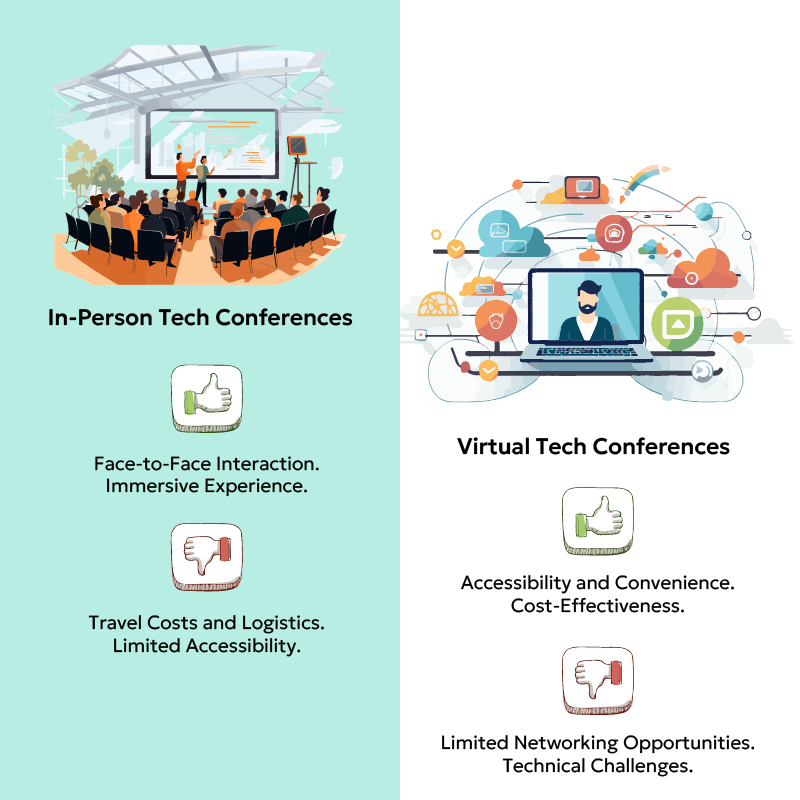
With the growth of digital technology, virtual tech conferences have become more popular. They offer unique benefits and challenges compared with traditional in-person events.
Let’s take a closer look at the benefits of digital seminars:
Pros
Accessibility and Global Reach
According to a report by Market Research Future, the global virtual events market reached $774.8 billion in 2023. This growth was supported by increased internet use, smartphone adoption, and the need for remote collaboration tools.
Virtual tech conferences improve accessibility. They allow attendees and speakers from around the world to participate without traveling.
This helps create a technology community that is:
- More diverse
- More inclusive
- More accessible
- Better connected globally
Cost-Effectiveness
Virtual tech conferences are often more affordable than traditional in-person events. According to a ConferenceMind survey, 76% of respondents identified cost savings as a major benefit of virtual conferences.
Organizations can reduce expenses related to:
- Travel
- Accommodation
- Event venues
- Catering
- On-site equipment
This makes virtual events a practical option for companies that want to improve ROI while reaching a wider audience.
Flexibility and Convenience
Virtual tech conferences offer more flexibility for both organizers and attendees.
With on-demand access to recorded sessions and resources, participants can engage with content based on their own schedules and time zones.
Virtual events also reduce many of the planning challenges linked to in-person conferences. This can make event management more efficient and convenient.
Cons
Virtual tech conferences provide new ways to connect, but they may not fully recreate the personal interactions found at in-person events.
A Bizzabo survey found that 67% of respondents viewed limited networking opportunities as a major drawback of virtual events.
To improve engagement, organizers can use:
- Live chats
- Q&A sessions
- Virtual exhibitor booths
- Networking spaces
- Interactive workshops
These features can help create more meaningful connections.
Conclusion
As technology continues to change, tech conferences remain valuable platforms for innovation, collaboration, and knowledge sharing.
“Tech conferences have transformed my recruiting experience in many ways,” says Nancy. “They provide opportunities for networking, talent sourcing, and building brand awareness. By attending these events, I have created meaningful connections with candidates and industry professionals, strengthening our recruitment efforts and helping position our organization as a leader in the field.”
Tech conferences give professionals opportunities to connect with industry experts, explore emerging trends, and showcase new ideas.
By choosing the right events and actively engaging with attendees, professionals can:
- Stay informed
- Build strong relationships
- Discover new opportunities
- Support industry growth
Tech conferences will continue to play an important role in driving innovation, encouraging collaboration, and shaping the future of technology.
Looking forward to a career in HR and Recruitment? We’re always looking for the best talent! Visit our job page to find a list of open opportunities to join our growing team.