

It turns out AI’s big IPO summer may not be as big as expected.
While SpaceX delivered on its promises and raised more than $85 billion as the largest US IPO ever, Anthropic in June got mired in another regulatory struggle with the US government and OpenAI may now be leaning on waiting until 2027, according to three people involved (as reported by the New York Times).
These are some of the stories we’re covering in our newest roundup of the top AI stories from June 2026.
Here are some of the other things making the AI rounds in June:
- Taste, and a big push to see if AIs can learn it
- Loop engineering
- Cybersecurity, which we covered in its own roundup (but we do talk Mythos, Fable, and GPT-5.6 below)
- AI moving out of pilots, with revenues rising but alongside costs
- New Chinese open-weight models and surging AI capabilities come at an interesting time for American businesses
- Chips and memory, memory and chips
As promised last time we’ll cover WWDC, and also Meta’s chaos, Google DeepMind’s talent drain, more AI business news, and a look at the latest goings-on with AI agents.
But first up: regulations and international updates.
Regulatory Involvement Tops June’s Artificial Intelligence News
AI’s getting scary.
That was the refrain throughout June as the US government wrestled with its own AI regulatory appetite.
We reported last time out about the new voluntary model screening program introduced by executive order, wherein companies are encouraged to submit their AI systems to the government for review.
Anthropic’s Mythos, which excels at finding and exploiting software vulnerabilities, was the test case for this. Access to it was extended to a limited number of customers through Project Glasswing (reportedly around 200 at its peak).
This process is playing out now with OpenAI, which released its newest model family, GPT-5.6 (in descending power/speed/cost as Sol, Terra, and Luna), only to partners pre-approved by the US government. There’s no public waitlist, and they’re only accessible through API and Codex—not via ChatGPT to anyone.
CEO Sam Altman (“I just don’t like the idea of the government picking the customers”) and OpenAI’s new Head of Strategic Futures/Hyderdimensional author/former Trump AI advisor Dean Ball (“US federal AI policy has gone from implausibly libertarian to increasingly draconian and opaque”) were among those publicly noting their dislike of the policy change.
Anthropic also worked with the government on the release of the Fable 5 model. A public version of Mythos 5 (also updated in this period), Fable reportedly brought much of the Mythos capability but with guardrails to default cybersecurity requests to Opus 4.8.
This was publicly released in June to enterprise and paid subscribers. Wharton School professor Ethan Mollick detailed his experience of working with Fable 5 here, and called it a “big jump in AI.” He found that it outperformed all other public models by “a considerable margin.”
But just days later, this release was reversed in another clash between Anthropic and the US government. This time the issue was jailbreaking, which was reportedly pointed out to White House officials by Amazon CEO Andy Jassy (one of Anthropic’s original investors).
Amazon research demonstrated a vulnerability which also appears to impact most other currently released frontier models (per the Cybernews).
The company reported rushed technical staff to DC but failed to sway officials in a tussle that ran through the rest of the month.
Additional updates included:
- The US Commerce Department’s initial testing found no issues with Fable 5, and the NSA has continued working with Anthropic (The Information).
- Anthropic pulled access entirely to both Mythos and Fable but has since worked out a deal to restore Mythos access customer-by-customer (reportedly reaching around 100 at month’s end). But full Glasswing and Fable 5 access was allowed to resume after this period, on July 1 (The New York Times).
- Anthropic has called on US lawmakers to implement a federal framework to clarify guidelines and provide independent testing. Other AI firms (including Nvidia and Anthropic) have signed (another) open letter supporting Anthropic (Reuters).
- Anthropic Co-Founder and Chief Compute Officer Tom Brown has taken over relations with the government, due to reported personal clashes between officials and CEO Dario Amodei (Wired).
- Access by China was also reported as one of the government’s concerns, leading to a push to exclude Mythos and Fable access to foreign nationals, including employees at Anthropic (The Hacker News). This, too, was reportedly resolved in July.
Legal updates, AI proxy fights, and the other regulatory stories
We’ve reported in prior editions about AI’s mainstream popularity problem. One way this is playing out is through data centers, which are becoming a proxy fight for the expansion of AI overall.
Other regulatory and legal from June included:
- June data from Milltown Partners showed that nearly half of Americans favor a moratorium on new data center construction, with only 8% of them being aware of new construction being built near them (Axios). Gallup data from May put American opposition at 70% for local area data center construction.
- Entrepreneur Mark Cuban and Microsoft CEO Satya Nadella were among business leaders speaking out in June about the public AI backlash. Nadella noted that a massive concentration of wealth and concerns over jobs are driving discontentment and advocated for greater diversification of AI.
- Cuban posted on X that data center hate is driven by these same things. He wrote: “the big LLMs have lost the PR battle. Why? Because they all suck at putting people first.”
- US Senator Mark Warner announced plans to introduce legislation aimed at regulating AI agents (The Information).
- The attorneys general of a coalition of states are now investigating OpenAI over a range of practices, including user data, treatment of minors, and advertising (The Wall Street Journal).
- A German court found Google directly liable for false claims made by its AI. The company’s AI Overviews linked two publishers falsely to scams and bad business practices, and the court ruled this as Google’s direct output, rejecting claims that users are responsible for checking the correctness of outputs.
- Workday faces a California class action suit alleging AI discrimination in hiring, and in June, the judge overseeing the case allowed “proxy indicators” of disabilities and illness to be included, and also refused to exclude people living outside of California applying for jobs in other states and countries (Reuters).
Open-Source AI and Chinese AI News from June 2026
Chinese access to Mythos became part of the regulatory story (see above), but the irony is that its withdrawal (alongside other top models) may be leading more business to embrace Chinese AI offerings.
Bloomberg reported in June on the move of more companies to open-weight Chinese models. Analysis of OpenRouter data found that the share of tokens requested from the top closed US AI modelmakers (Google, OpenAI, and Anthropic) fell to 33% in June 2026. Their models had held a 72% share in these token requests a year prior.
New models from Chinese companies like Zhipu (GLM 5.2) have gained rapidly on benchmarks for industry leaders like Anthropic’s Mythos 5, and at the time of this writing hold six of the top 10 spots on the leaderboard, with DeepSeek’s V4 Flash at #1.
(Check out the OpenRouter LLM token leaderboard here, where you can also view top models by task, market share, benchmark performance, speed, and more.)
What does the rise of open-source AI mean for businesses? Lower costs and more freedom for customization and control.
More than anything, it brings choice. As start-up investor at Madrona Venture Group Vivek Ramaswami told the New York Times:
“Do you need to drive a Ferrari everywhere? Probably not.”
Other Chinese AI news from the period included:
- Both OpenAI and Anthropic have accused Chinese companies of illegally harvesting data for distillation. Anthropic leveled the biggest yet accusation in June against Alibaba, alleging the company used 24,000 fraudulent accounts to engage 28 million times with Claude in a move to steal their technology (Bloomberg).
- Super Micro’s Taiwan offices and the residences of several employees were raided by the country’s government at the end of June, in an investigation of the smuggling of Nvidia chips into China (Bloomberg).
- China now has the world’s fastest supercomputer, called LineShine. It displaced the US’s El Capitain in the TOP500 rankings. These rankings measure the world’s top computers every six months, taking into account theoretical and real-world performance and energy efficiency. China has been out of the top place for nearly decade, and LineShine is unique in that it doesn’t use GPUs (Wired).
- We’ve covered the plan to put data centers into space, but China opened the world’s first wind-powered, underwater data center. Located off the coast of Shanghai, it uses seawater for cooling, joining another underwater data center that was opened in 2023 (Wired).
- The Chinese government had already ordered Meta to divest its stake in surging AI agent startup Manus, and now Chinese investors are buying their share back for a reported $2 billion (The Information).
- Chinese AI researchers are also worried about cybersecurity, and these concerns have led to some of the country’s top models no longer being offered as open source (Wired).
Sovereign AI and the G7
Europe is also investing heavily in supercomputers, opening 35 new systems powered by Nvidia technology.
French president Emmanuel Macron and the CEO of Canada’s Cohere (Aiden Gomez) pushed for the diversification of the AI supply chain at the G7 conference.
Cohere is working on numerous international partnerships, while Macron has won a 75-billion-euro commitment from Softbank for French data centers. Their effort is joined by one of the godfathers of AI, Yann LeCun, who is part of the Project Tapestry effort to build an open-source foundation-level model.
American AI leaders like OpenAI CEO Sam Altman and Anthropic’s Dario Amodei also attended this year’s G7 for talks that included risks from the newest models and protecting children (CNBC).
The UK, meanwhile, is trying to grow internal chip companies through a state-backed infrastructure startup. Announced in early June, it includes more than a $1 billion investment in a new supercomputer, part of the country’s effort to break away from foreign AI dependence (Wired).
South Korea announced its own massive AI initiative, with a reported $880 billion over ten years earmarked for investments in chips and robotics (The Information).
Latest AI News on Adoption and Use
Before we leave Chinese AI, one more note: AI’s use in advertising was a major spotlight of the annual Cannes Lions gathering. Internet and commerce firms are displacing traditional media companies, and now five of the world’s 10 biggest advertising firms are based in China (The Information).
AI overall was a major topic of the festival, with OpenAI executives giving keynote presentations, and Amazon’s Alexa+ Agentic Ads being unveiled.
This format reportedly takes a user from discovery through purchase entirely within the ad itself (Hollywood Reporter).
What are the latest developments regarding AI agents?
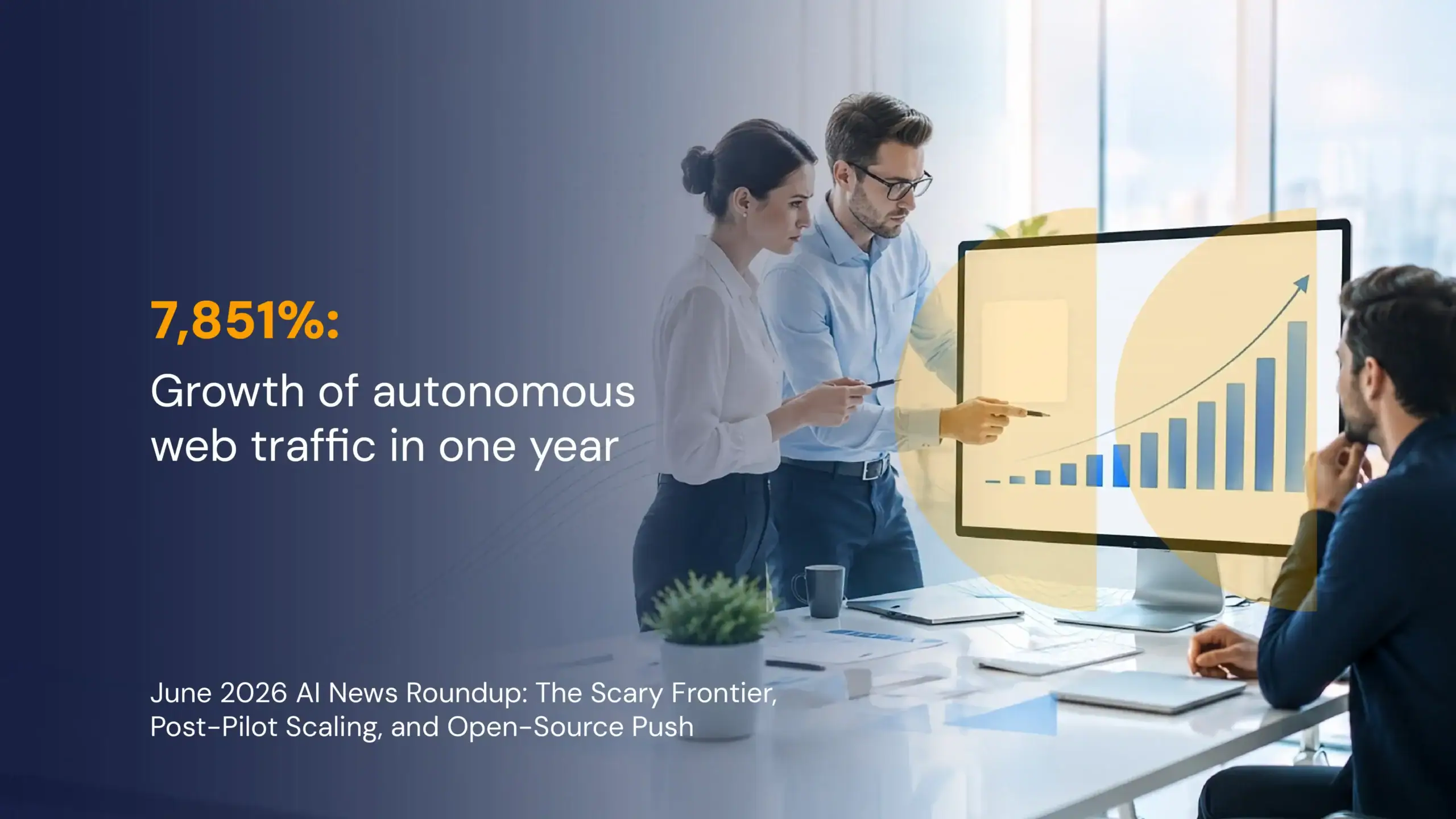
Our banner at the top hits on the exploding volume of autonomous traffic on the web. Cloudflare data shows that now humans only account for 42.6% of global internet traffic.
In the US, the volume is even higher, at 68.6% bot to 31.4% for humans (CNET).
How are enterprises adopting AI in 2026? Several ways were detailed in early June by the New York Times Magazine, with many small businesses making extensive use of OpenClaw agents.
Among the uses profiled: virtual staff for repetitive office tasks like emails and handling customer inquiries, tracking expenses, doing research, processing orders and refunds, managing Amazon bids and keywords (with restricted budgets), analyzing contracts, translating messages, changing bookings, logging receipts, handling calendars and more.
And while the agents do sometimes run amok, none were aware of suffering prompt injection attacks, though this remains a serious vulnerability. While security experts have secured OpenClaw in many ways, this remains a significant problem for most AI agents.
Other agent updates from June included:
- A Boston University professor joined forces with the Boston Consulting Group (BCG) in a study of dozens of companies. They found that work by “AI employees” is less likely to be carefully vetted than work done by humans. One reason is that many managers feel it’s not their responsibility. The professor also warned about issues that aren’t technological but come from humans in agent adoption. AIs have been shown to also have bias towards their own content (The New York Times).
- Add Google DeepMind to the companies that are concerned about millions of AI agents interacting. They’re calling for more scientists to study the ramifications of this near future with a $10 million contribution to research. The concern is around the unpredictability of their collective behavior (MIT Technology Review).
- Anthropic rolled out Claude Tag, an always-active AI agent that can live within Slack. Its purpose is to function like another member of the channel. Anthropic claims 65% of their product team’s code is created by an internal Claude Tag, which can be set to be purely reactive or work proactively (ZDNet).
Enterprise AI coding updates
This brings us to AI coding updates (which are also usually AI agent updates).
We start with the emerging focus on loop engineering. We’ve written in recent articles about the importance of looping AI coding tasks so that agents can assess their own work before human review.
“Loop engineering” is about perfecting this process. It was discussed heavily on social media by AI experts like Claude Code’s Boris Cherny, OpenClaw’s Peter Steinberger, and Andrew Ng, who shared via his Batch blog in June his three key loops.
He uses these both for coding and for deciding what to build:
- Agentic coding loop (minutes): He gives agents product specification and maybe a set of evals, and it iterates until it meets specs and is bug-free.
- Developer feedback loop (hours): Here the dev looks and works with the AI agent to improve the product. He’s found the intervals between needing this stage have grown significantly, now between tens of minutes to tens of hours.
- External feedback loop (days): Here the product finally goes out for evaluation or A/B testing, rarely taking less than hours and sometimes taking days or weeks.
Speaking of loops, research released in this period (see sources below) fully broke down Claude Code’s architecture and found it to be some 98% “operational infrastructure,” or software.
The leading coding software heavily utilizes while-loop LLM calls, tool runs, and repetition, with most of the code built around the loops themselves.
AI Industry Updates
Business Insider reported on new research from RBC Capital Markets, which conducts surveys of top CIOs and tech leaders every six months and compares the results.
Their takeaways from June:
- While almost half of these tech leaders had already exceeded their entire year’s AI budgets, nine in 10 felt token costs are manageable.
- Most also intend to increase token spend and predict token costs will decrease.
- OpenAI remains popular among those surveyed.
- Most are spending more on software, too, alongside their increased AI spend.
- 90% have now either moved AI projects out of pilot phase already (55%) or were aiming for production within six months (35%).
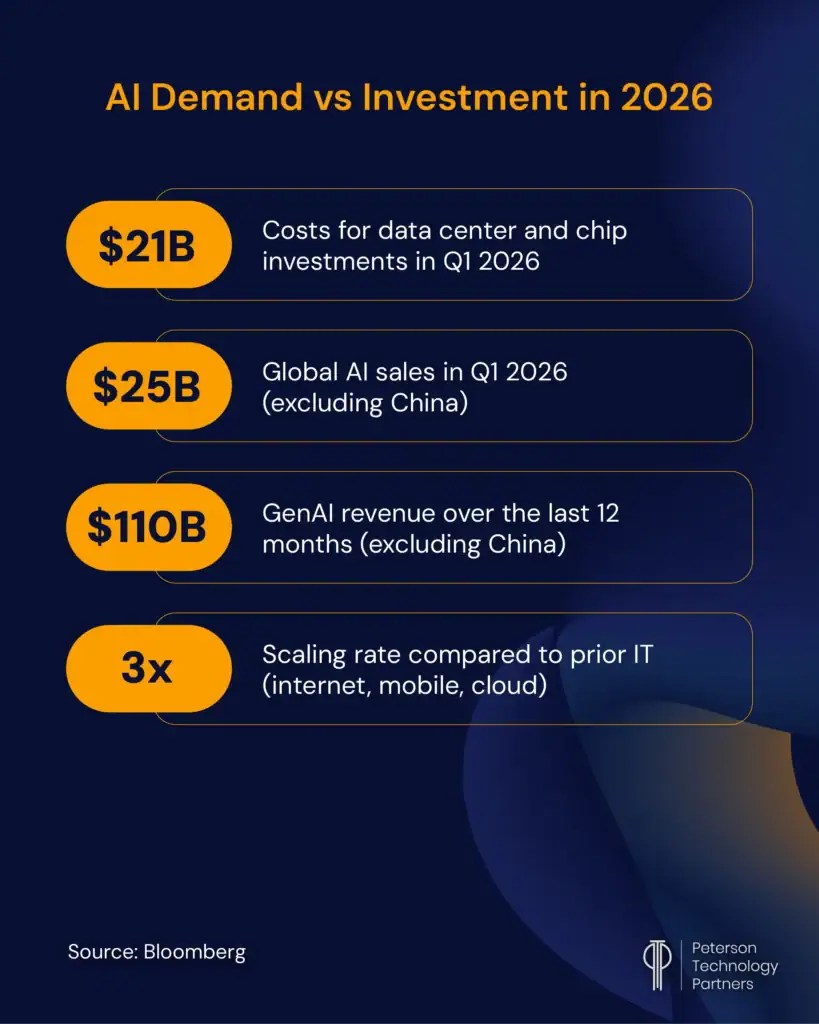
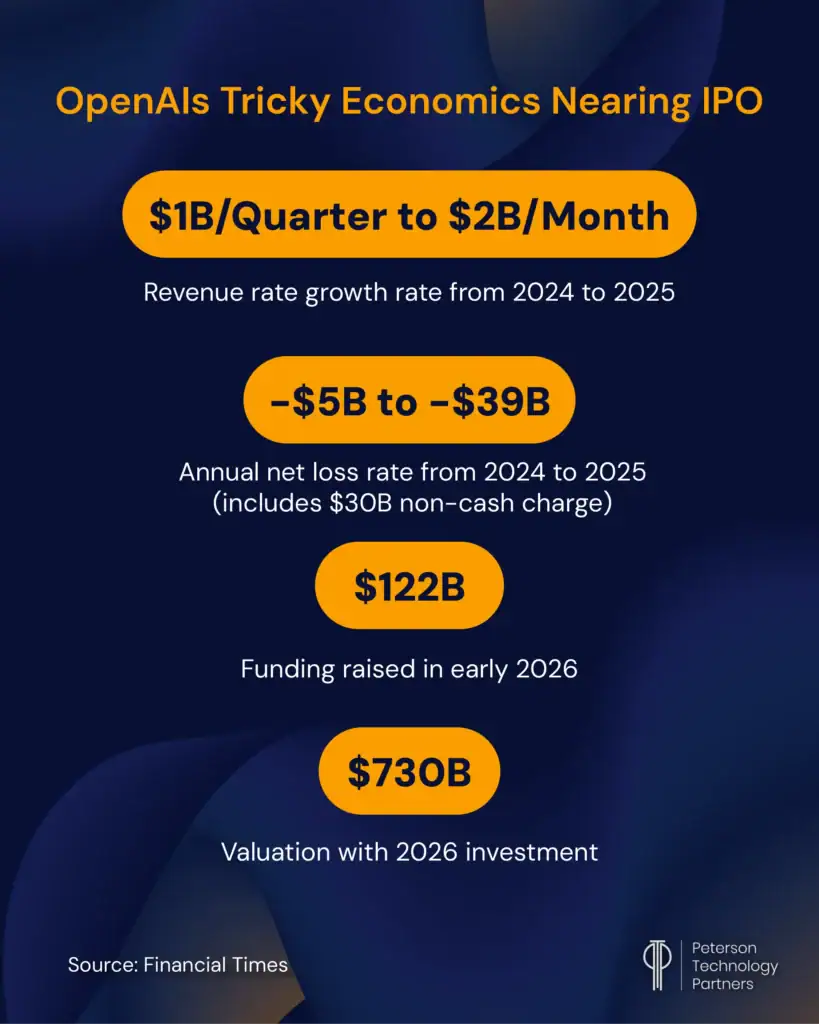
Overall, AI revenues are rising significantly (see above; exceeding $110 billion over the last year, excluding China), but infrastructure expense is keeping pace.
In the markets, it’s been a complicated year for AI.
The Magnificent Seven is down more than 13% since a peak last month (the broader market down around 2%), with some AI firms like Amazon (down 11%), Alphabet (Google, down 12%), Meta (down 14%), Nvidia (down 18%), and Microsoft (down more than 30%) well off their 52-week highs (Yahoo Finance).
This landscape may be one reason why OpenAI is planning to delay its IPO to next year, with the aim of being valued above $1 trillion dollars.
What else happened in AI in June 2026?
Here are some of other noteworthy AI business updates from this period:
- Anthropic’s Claude Design is the latest example of new AI functions leading to rifts with software builders. In this case it’s with partners Figma and Canva (The Information).
- SpaceX went public as mentioned at the top, and in this process its relationship with Google continues to grow. Google owns nearly 5% of SpaceX, and the two are working on an ongoing infrastructure deal (at $920 million per month, per CNBC).
- SpaceX also completed their $60 billion acquisition of AI coding solution Cursor (Bloomberg).
- Google DeepMind suffered several significant defections from among their top researchers, including VP John Jumper (the 2024 Nobel Prize winner we profiled in our November 2025 AI update). He left for Anthropic, while famous researcher Noam Shazeer (one of the lead authors of Attention Is All You Need) left for OpenAI (Bloomberg).
- Google’s talent drain continued in ensuing weeks, with more top AI researchers—Jonas Adler and Alexander Pritzel—also jumping to Anthropic (TechCrunch).
- With compute increasingly seen as a critical bottleneck, Google made news in late June for restricting Meta’s Gemini access due to an inability to meet their desired capacity (Financial Times).
- Meta, meanwhile, has reportedly blocked the other big players, Claude and Codex, due to distillation concerns (The Information).
- Meta is also reportedly suffering internal unrest, and CTO Andrew Bosworth blamed this at least partly on an “atrocious” AI re-organization. In leaked internal memos, he promised to “rekindle the best of the culture we joined” (Wired).
- Data centers needs have caused a shortage in computer components, including memory, and this triggered a big spike in Apple prices in June. Outgoing CEO Tim Cook called the situation “unsustainable” (The Wall Street Journal).
We promised some coverage of Apple’s annual WWDC event, which offered a glimpse of the company’s new AI direction. Highlights from the event included:
- The full Siri rebuild is here. AI functionality allows Siri to now search across personal context (email, messages, photos) to make recommendations, answer questions, and take some actions like drafting communications.
- Apple expressed a continued commitment to privacy with its AI push, using Private Cloud Compute for personal data that’s neither stored nor accessible to the company.
- The company unveiled their next generation of Apple Foundation Models, built in collaboration with Google, and promised new APIs for AI in Xcode.
- Safari has added AI capacities for organizing browser tabs and monitoring sites for changes.
- Apple Passwords can now reportedly improve your weak passwords all on its own.
Apple’s increasing move into AI remains focused on not abandoning their core commitments to product and privacy.
Conclusion
So how are companies scaling AI beyond pilot projects?
The best way is by building the right kinds of pilots to begin with.
PTP helps companies throughout their AI journey, from analyzing readiness to selecting effective use cases to rebuilding workflows. We help companies measure, govern, and build effective human-AI interaction to get sizable, lasting AI benefits.
If your company is looking for practical, safe AI scaling that earns, talk to us.
And for our AI updates from the last three months, check out the most recent AI news roundups below:
References
What it feels like to work with Mythos, One Useful Thing
How a warning from Amazon led the White House to shut down Anthropic’s Mythos model, Fortune
The U.S. government will decide who gets to use the latest American AI technology, The Washington Post
This new research challenges nearly every big AI narrative of 2026, Business Insider
OpenAI spending hit $34bn last year ahead of planned IPOI and Businesses face up to budget-busting AI bills, Financial Times
Anthropic Offers Mythos Upgrade for Cyber Partners and a ‘Safe’ Version for the Rest of You, Europe Is Fed Up and Wants Its Own AI, Wired
Landmark German ruling declares Google’s AI Overviews are Google’s own words and makes it liable for false answers, The Decoder
White House AI crackdown opens door for China to close gap, CNBC
Chinese A.I. Models Close the Gap With Anthropic and OpenAI, The Small-Business Owners Managing Whole Armies of A.I. Employees, The New York Times
Weekly Issues: issue 359, The Batch
Dive into Claude Code: The Design Space of Today’s and Future AI Agent Systems, arXiv:2604.14228