

In my previous article, I discussed the importance of Site Reliability Engineering (SRE) in running an efficient online business.
Google first introduced SRE in 2003. It changed IT operations by bringing development and operations teams closer together.
However, the evolution does not stop there.
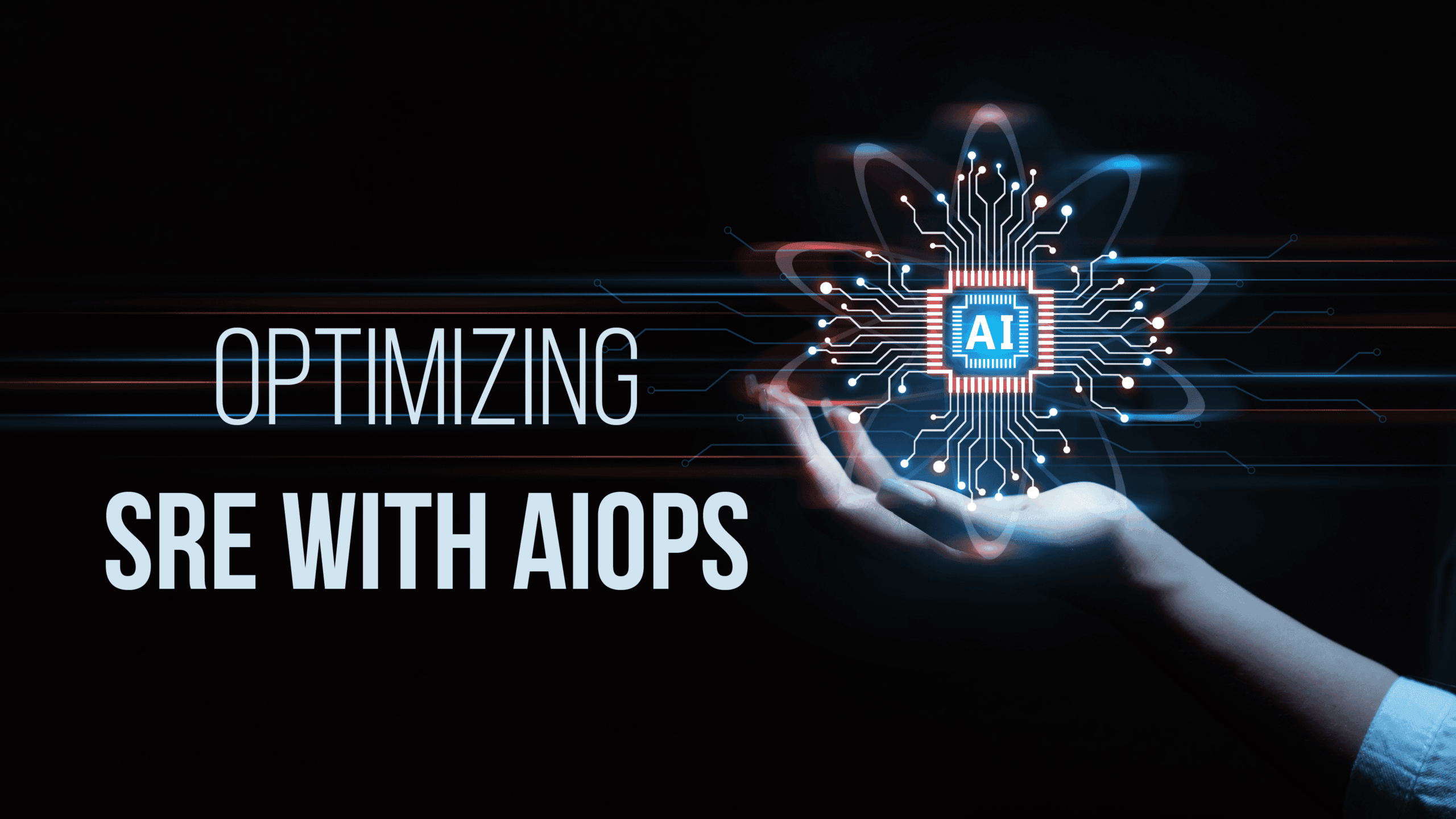
Artificial Intelligence for IT Operations (AIOps) is taking SRE to the next level.
AIOps uses AI and machine learning to:
- Automate tasks
- Provide predictive analytics
- Improve system reliability
- Support faster issue resolution
Before SRE and AIOps, development and operations teams often worked separately.
This created operational challenges and could reduce system reliability.
SRE introduced shared responsibility for reliable systems.
AIOps takes this further by automating and improving key reliability processes. This can also improve overall business performance.
Let’s explore how AI and SRE work together.
Monitoring and Observability
System reliability depends on the ability to measure and understand performance.
This is where observability plays an important role.
Observability helps teams:
- Understand system behavior
- Identify root causes
- Spot unusual activity
- Predict possible issues
Observability includes three main components:
- Logs that record system events
- Metrics that measure performance data
- Traces that track request journeys
Together, these components provide a complete view of system performance.
AIOps adds intelligence to observability.
It helps SRE teams monitor applications in real time. It also connects data from different system components.
This changes alerting from a reactive process to a proactive one.
Using time series analysis and machine learning, AIOps can spot unusual patterns before failures occur.
This helps SRE teams prevent outages and reduce business disruptions.
Data Collection and Monitoring: Laying the Foundation
To fully use AIOps, organizations must focus on three key areas:
- Data collection and monitoring
- Data analysis and insights
- Automation and remediation
Effective AIOps starts with collecting relevant data.
Sources may include:
- Logs
- Metrics
- Events
- Application data
- System activity
Think of this as building a strong foundation.
Without reliable data, organizations cannot monitor system performance and health effectively.
For example, a large e-commerce platform can collect data about user behavior, website traffic, and server activity.
AIOps can then analyze this information.
It can provide useful insights into:
- Customer trends
- System bottlenecks
- Performance issues
- Possible security threats
Data Analysis and Insights
Once the data is collected, AIOps uses AI and machine learning to analyze large amounts of information.
These technologies can find patterns and unusual activity that human teams may miss.
The results provide useful insights.
This allows organizations to make better decisions based on data.
For example, AIOps may detect a sudden increase in website traffic during a promotional event.
The organization can then scale its infrastructure automatically.
This helps maintain a smooth user experience.
Automation and Remediation
One of the biggest advantages of AIOps is its ability to automate routine tasks.
It can also resolve some issues without human intervention.
AIOps can use machine learning data to understand problems and apply the correct response automatically.
This can:
- Reduce manual effort
- Improve response times
- Limit downtime
- Increase system reliability
For example, an application outage may affect several services.
AIOps can identify the root cause, restart affected services, and redirect traffic to backup systems.
This can happen within seconds and help reduce disruption for customers.
Self-Healing and Self-Teaching Systems
AIOps helps systems become more proactive and predictive.
Instead of only reacting to problems, these systems can prepare for them.
Self-healing systems can detect unusual activity and take corrective action before it becomes a major issue.
This is similar to an intelligent driver assistance system.
The system can warn drivers about road hazards and take action when needed.
AIOps works in a similar way.
It can identify unusual workloads or system behavior and help organizations prepare for future conditions.
For example, AIOps can predict higher website traffic during a flash sale.
It can then assign extra resources before demand becomes a problem.
This helps create a smooth and reliable customer experience.
Cybersecurity
AIOps and self-healing systems also provide important security benefits.
Any organization with an online presence must deal with cybersecurity threats.
Attackers may try to:
- Access sensitive data
- Disrupt services
- Damage critical systems
- Compromise user accounts
Cybersecurity teams need to monitor logs and protect systems from these threats.
One of my clients is a global retailer that depends heavily on its e-commerce platform.
The company required back-end support every hour throughout the Thanksgiving weekend.
Because the company operates online, even a short period of downtime could lead to major revenue loss.
Customers may be unable to:
- Browse products
- Place orders
- Complete payments
- Access their accounts
This can seriously affect the user experience.
AIOps helps organizations:
- Set parameters to block malicious activity
- Alert cybersecurity teams about current or possible threats
The latest security trend is to use AIOps to detect and prevent threats with minimal human involvement.
Protection Against DDOS Attacks
DDoS attacks are among the most common cyber threats faced by online service providers.
DDoS stands for Distributed Denial of Service.
In this type of attack, multiple devices flood a targeted system or network with traffic or requests.
This excessive traffic can overwhelm systems.
It can also prevent legitimate users from accessing services.
AIOps can help reduce and prevent DDoS attacks through:
Anomaly Detection:
AIOps learns normal network behavior.
It can then identify unusual activity that may suggest a DDoS attack.
This allows teams to respond more quickly.
Traffic Analysis:
AIOps analyzes network traffic patterns.
It can separate harmful activity from normal traffic.
This helps teams prepare for possible attacks.
Automated Response:
When a DDoS attack is detected, AIOps can automatically activate security measures.
These may include:
- Redirecting traffic
- Filtering harmful requests
- Blocking suspicious activity
- Activating backup systems
Although AIOps provides strong DDoS protection, organizations should also use other security measures.
These include:
- Traffic filtering
- Network load balancing
- DDoS protection services from network providers
Cybersecurity is always stronger when combined with human expertise and oversight.
Read More – Scaling up with AI- The Path to Productivity
Conclusion
With advancements in AIOps, SRE is becoming more accessible to smaller companies.
These organizations may not have large in-house IT teams.
AIOps can help them automate tasks, monitor systems, and respond to problems more efficiently.
The technology is now widely used by enterprises of different sizes.
It also continues to influence modern IT strategies.
The integration of AI into Site Reliability Engineering through AIOps is a major step forward.
AIOps improves:
- Monitoring
- Analytics
- Automation
- Security
- System reliability
This creates a more reliable, efficient, and secure IT environment.
Together, AI and SRE are redefining the future of IT operations and system reliability.