The EU AI Act crossed a major enforcement line at the start of last month (August 2, 2026).
This stage mandates AI transparency, and Anthropic complied by announcing all models released after this date will implementing watermarking on text and file outputs, across all product lines (Claude platform API, Claude, Claude Code, Claude Cowork, and Claude Tag).
Other companies like Google and Meta have suggested they will provide transparency and create watermarking tools, while OpenAI is publishing training data summaries for compliance along with embedded signals. Microsoft has also made internal risk management and governance changes to comply.
Within the EU, this means that AI use must be identified on media posts and in calls, as well as mandating its disclosure for uses like scheduling, in communications, and negotiating contracts.
Transparency notices have spread, and the EU’s AI Office can now ask companies for access to models and for their compliance information.
Still to come: rules for categories of high-risk systems and coverage of AI use in physical products.
What are the other big AI news stories from August 2026?
From routers to better agents, “AI native” layoff plans to Nvidia’s earnings spike, our PTP Report AI roundup has it covered!
AI in Action
We’ve written a lot here about the chips that go in data centers, but less about AI and the kind of chips we eat.
Turns out AI is involved there, too, in numerous ways.
One new approach being pioneered by Kellanova (maker of Pringles in Europe) and Siemens is using AI to improve the consistency of flavor, despite variations in potato batches.
With chip dough previously being checked manually on assembly lines, this new process uses real-time digital twins to analyze the dough’s components at particle size.
The data then feeds an ML-based model that determines how to adjust the machines proactively to maintain consistency.
From adjusting products in assembly to adjusting LLM use based on task, AI model routing use is surging as companies look for ways to manage costs.
OpenRouter, which boasted 8 million users and 400 models available in May, lets companies direct their tokens between varying AI models based on need, and was bought for $7.5 billion by payment facilitator Stripe in August (The New York Times).
Meta is reportedly building its own routing offering called Switchboard (per The Information), while open-source TrustedRouter boasts end-to-end encryption and its value as a means of helping companies protect their IP (and autonomy) from big AI.
These tools allow users to prioritize their LLM selection by speed vs performance, as well as cost and a provider’s reputation for a given task.
Palantir is a big booster of the approach, with Chief Architect Akshay Krishnaswamy telling Axios:
“It’s not to say you won’t ever use commercial models, but it’s like you want to have the options to use models that are specific to you.”
AT&T is one company that’s detailed how it has fought rising usage costs from top firms like Anthropic and OpenAI using AI model routers like LiteLLM.
The telecom firm uses AI heavily internally and now sends 40% of all employee AI queries through open-weights options, with plans to increase this as high as 70%.
And while they still use frontier solutions (like Claude Code, Codex, GitHub Copilot, and Devin) for some complex coding needs, other tasks—like summarizing previously submitted code—have been moved to open-weights models like Nvidia’s Nemotron, Meta’s Llama, and Google’s Gemma.
This has seen AT&T’s reported coding costs drop by 56% with an AI performance drop of just 2%, and they are currently evaluating Chinese options from Moonshot and DeepSeek for risk with an eye to improving quality without added cost.
What are the latest developments in agentic AI?
The Wharton School’s Ethan Mollick posted on LinkedIn in August about one of agentic AI’s most impressive feats to date: taking on family tech support.
After many years without a laptop, his father used Codex to set up his new one. The agent conducted the work and installed what he needed, and when he finally called it was to say he’d done it himself.
Professionally, some companies are finding similar levels of breakthrough, like Google’s move in the arena of forward-deployed engineers (FDE).
Companies like OpenAI, Anthropic, Microsoft, and Amazon have been investing billions of dollars in human FDE teams to help implement their AI solutions for third-party companies in the Palantir model.
Google had also been pursuing this plan but has since changed course. For preparing corporate data for their AI, they’ve now moved off FDEs recently in favor of AI agents.
Google Cloud Vice President and General Manager of Database Products Andi Gutmans told the Information that the company had hit the limits of what FDEs were able to accomplish given the scale that was needed.
“If you want to move to activating 100% of your enterprise data, you’re not going to be able to hire enough people to make that happen.”
They use AI systems now to go through as much customer data as possible first (including files and legal contracts) to gain understanding of the business operations and data flow.
From here they create layers and graphs to reduce the energy AI agents need to complete tasks.
Virgin Media O2 used this process to connect 20,000 separate datasets. This has made it much easier for their own agents to retrieve relevant data and was a task that would have taken human FDEs thousands of hours of manual work.
But techniques like these are seeing AI being integrated far faster and more extensively at some businesses than others.
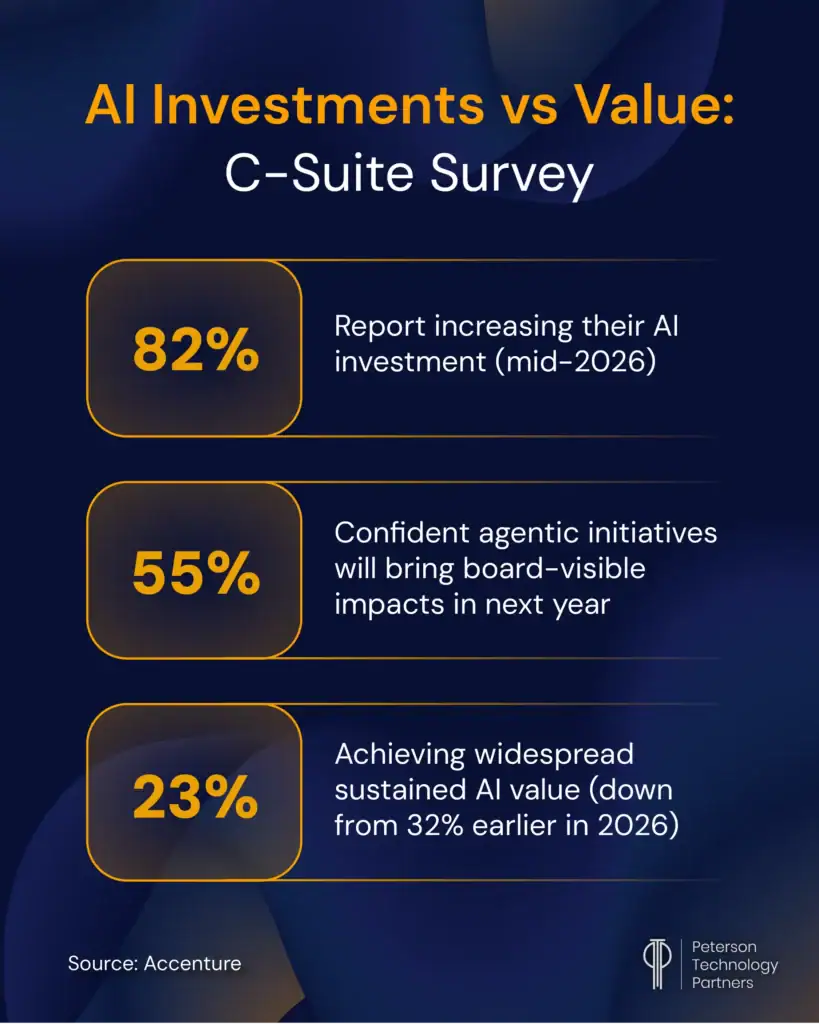
Research released in August (from Columbia, Penn’s Wharton School, and OpenAI) analyzed ChatGPT Enterprise data across usage, workers, and tasks, and how it tied to financial data (through March 2026).
They found AI volume accelerating fast at larger, more valuable companies, spanning job functions and titles but with especially high among workers earlier in their careers.
Company use spanned knowledge tasks like technical work, communications, and incorporating information, but found, as most studies have, that success varied wildly among firms.
How are AI agents changing jobs and businesses in 2026?
With more bots online every day, the internet eyes a post-human future. This changes the nature of marketing as well as many forms of transaction, where both sides may soon pass through an AI phase before involving humans at all.
Research from the Harvard Medical School considered this in a hospital setting: scenarios where one tool analyzes x-rays while another assigns rooms and a third organizes patient treatment.
And while a single error here might cascade down the chain, Mastercard has invested in a framework for agent ecommerce transactions (Agent Pay, rolled out last year) to ensure a secure and verified process.
It vets agents and applies the same checks as with humans. As CEO Michael Miebach told Yahoo’s Brian Sozzi:
“All of these transactions in the world of agents will all be tokenized, and they’re extra safe. So no need to worry.”
But it’s another question if people and processes are ready.
Making progress with agentic AI
Each month, this is a recurring story: agentic AI spurs productivity but many organizations still struggle to get value, seeing the gap widen in the volume, and effectiveness, of AI use across industries and around the world.
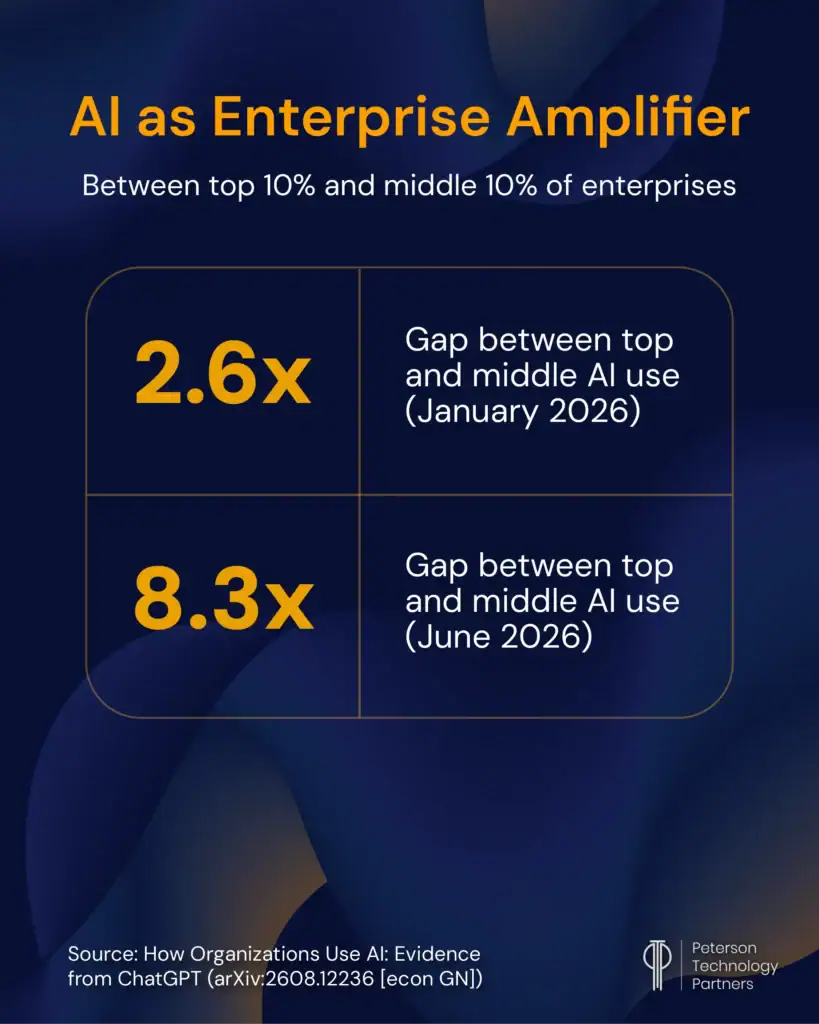
Accenture’s Pulse of Change report surveyed 3,000 C-suite leaders and another 3,000 non-C-suite employees and found 2/3 of C-suite respondents noting agentic AI productivity was now greater than expected.
But most also indicated that sustained business value continues to lag.
An op-ed in the August New York Times from the ex-CIO of Lululemon, Julie Averill, offered several reasons why.
She suggested:
- Companies are fast to adopt, label, and proclaim their AI use, but often without a strategy behind it to match.
- Pilots are more amazing than ever, leading to what she calls “AI wishing,” or buying into insufficiently planned-out initiatives or expecting turnarounds that are too fast and easy.
- In this process, many are spending too much money, and even cutting workers prematurely, despite failing to fully tap into the technology’s real capabilities.
- Lacking clean, connected data is one consistent (and challenging) problem.
- Dataflows with elaborate workarounds and exceptions that aren’t clean or repeatable enough is another.
- Together, this can lead to “AI washing,” or doing AI (or even layoffs) more for show than for substance.
At the other end of the spectrum are companies like Thrive Holdings.
They buy into traditional companies in accounting and IT to transform them with AI, also creating platforms to make the process easier.
Through this process, they’ve become one of the nation’s 20th largest account firms, with their members decreasing tax prep times by a third this season, as their IT arm handles queries 36 times faster.
Jobs, AI, and Layoffs
The Bureau of Labor Statistics published its projections for job growth over the next decade, and while nurse practitioner led the list (+41%), several energy and AI-related positions made the list, from solar panel installers and wind turbine service techs to data scientists, computer and info research scientists, and info security analysts (Business Insider).
But while nurse practitioner jobs may be on the rise, an article published this month in the Journal of the American Medical Association makes the case that a view of the future where AI-assisted physicians is the high-tier and AI-only care serves as an “economy class” may be greatly underselling AI value in medicine.
It proposes that for purely mental medical functions, AI actually delivers superior results to either physicians alone or hybrids of physicians +AI.
Unsurprisingly, many disagree, including the CEO of American Medical Association John Whyte. He told Wired’s Steven Levy:
“The AMA does see the potential in these tools, but they have to be utilized in the context of a care plan that’s governed by a physician.”
And while there’s widespread agreement the systems are already very good at diagnostics and improving, there’s also concern, as in many technical positions, that dependence on AI now might also undermine the learning process for new doctors.
What are the biggest AI layoffs and workforce changes from August 2026?
Reuters reporter Katie Paul broke a story in August about large, canceled (or at least delayed) AI-driven layoffs at Meta.
Her report details how the company’s Project OT (Organization Transformation) aimed to reduce teams by as much as 60% in favor of what it called “AI-native” workflows.
10% of the company was laid off in May, but a second, potentially more substantial round was to have come in November, alongside plans to identify outsized contributors and reward them accordingly.
We’ve shared reports previously on discontent and workforce monitoring at Meta that were allegedly part of this initiative, but the report details how it was also delayed due to a lack of technical readiness.
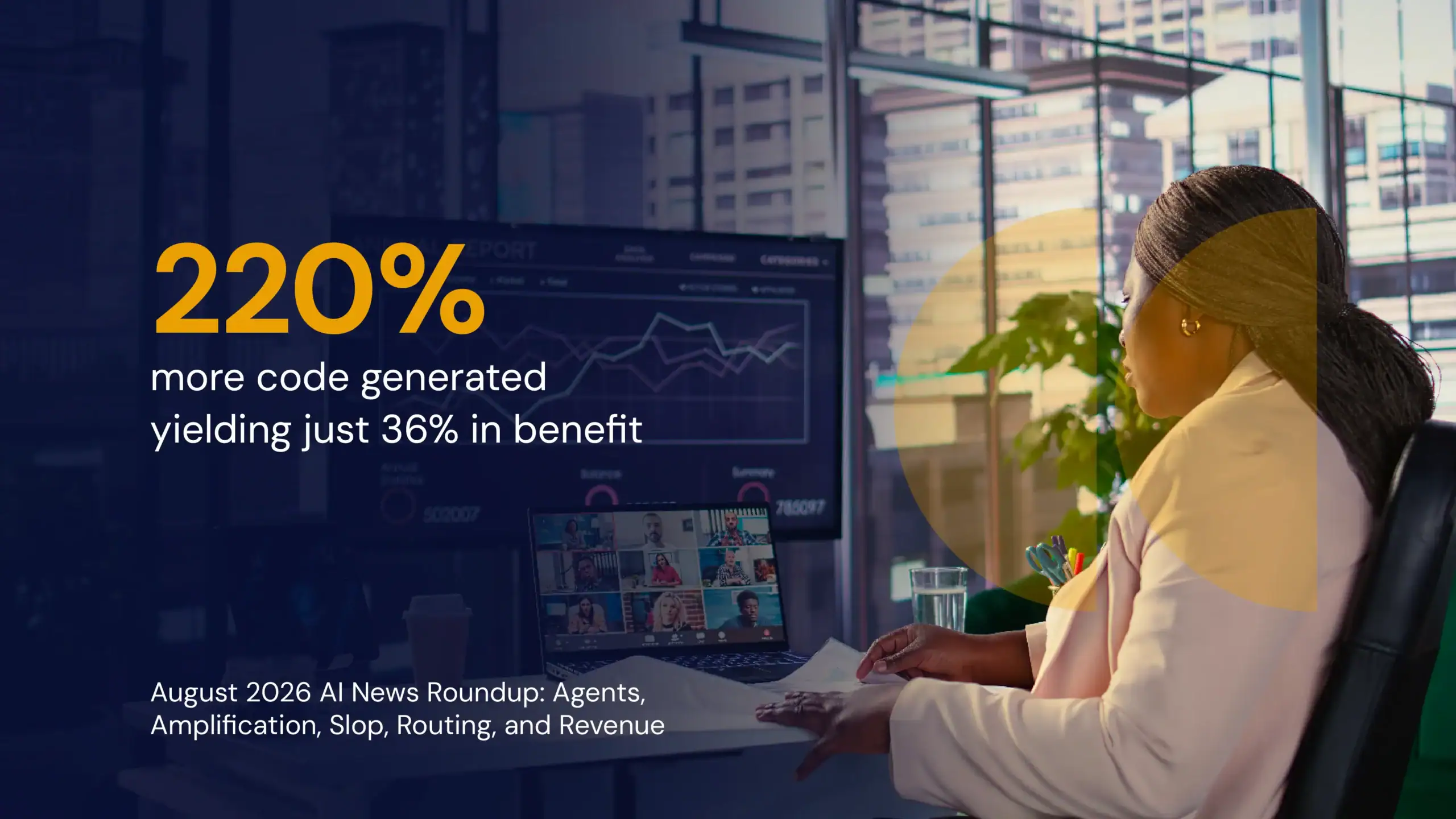
Among the issues were numerous “reliability warning signs,” with the smaller, AI-native coding teams generating far more code (220%) but with much of it failing to produce results (only 36% successfully reaching users), alongside a spike in major technical and security incidents (up 40%), and human time spent “firefighting” (up 70%).
CEO Mark Zuckerberg reportedly canceled the plan and addressed it an internal town hall, saying the technology was still improving but hadn’t met their initial expectations on the schedule believed.
Oracle, meanwhile, is reportedly planning another round of AI-driven layoffs. With their stock price down and AI investments up, some teams could expect to see double-digit reductions to follow a 13% reduction earlier this year (Business Insider).
In the broader workforce, meanwhile, a “low hire, low fire” state seems to be holding, with jobless claims down in August (The Wall Street Journal), private hiring also below expectations (ADP), and unemployment impacted by reduced workforce participation (Yahoo Finance).
Meanwhile, OpenAI research (from their Work at the Frontier series) looked at how AI is changing work through what they call “task crossover.”
Looking at tasks that are not broad across jobs (like summarizing, writing, scheduling, etc.) they found that nearly half of a user’s ChatGPT work interactions occur outside of their own job description.
In other words, AI appears to be breaking down traditional job boundaries, with more workers using AI to “borrow” tasks from other positions.
The Latest AI Company News
Federal Reserve Chairman Kevin Warsh appointed a special task force earlier this year focused on jobs and productivity.
He stressed the central bank is watching the AI impact “attentively,” noting in his speech at Jackson Hole that:
“The potential for substantially higher growth is on the rise. Ever-expanding pools of capital are pouring into AI-related infrastructure of all sorts” (Yahoo Finance).
AI revenue and investment updates, August 2026
Now to our AI news roundup from the big AI firms. Here are some of the biggest headlines from August:
- Nvidia quelled AI jitters by once again blowing out expectations in their quarterly earnings. They announced both revenue ($96.2 billion) and quarterly profit ($59.69 billion) had more than doubled from last year, while also increasing their Q3 revenue outlook (saying it will increase 90% from last year). CEO Jensen Huang noted demand still accelerating and said that “AI has reached its inflection point,” now doing truly “useful work” (The New York Times).
- AI services and defense firm Palantir also exceeded expectations ($8.16 billion in full-year revenue), with CEO Alex Karp touting “sovereign AI” and calling the quarter “otherworldly.” He noted their US commercial revenue grew 149% year-over-year (Yahoo Finance).
- Google’s Gemini app hit one billion monthly users (The Information), though the company may have made bigger headlines from the loss of talent and leadership in August.
- DeepMind Co-Founder and Nobel-prize winner Demis Hassabis stepped aside from operations to become DeepMind chair and Alphabet’s chief scientist, as the company said farewell to longtime researcher and Google Chief Scientist Jeff Dean, who left along with three other senior Google researchers to launch their own startup Discovery Loop (The New York Times).
- Google also acquired at auction (for $10 million) the business data of bankrupt Spirit Airlines. The cache contains code, Teams chats, and emails, and is deemed highly valuable as a means of improving their AI training with real business data (Bloomberg).
- Chinese open-weight model provider DeepSeek reportedly reached hit $70 million in revenue through the first seven months of this year, a tenfold increased from their entire 2025 revenue (The Information).
- OpenAI announced on the last day of the month that their ad revenue reached $1 billion in annualized run-rate revenue, after just six months (CNBC).
- Anthropic saw its own annualized revenue top $65 billion at the end of July, according to unnamed sources, more than a seven-fold increase from 2025 as the company eyes a fall IPO (Bloomberg).
- Anthropic also got welcome IPO news when a judge blocked the Pentagon’s designation of them as a supply chain risk, deeming it an illegal move of retaliation (CNBC).
- Anthropic is nearing their biggest acquisition ($6 billion for Decart AI, a world model startup, per Bloomberg) and also announced its Model Hardware Standard (MHS), now in testing. Like MCP, it will standardize AI use with devices like microscopes, robotic arms, liquid handlers, quantum-computing equipment and other lab and manufacturing hardware (The Information).
- The SaaSpocalypse was also put on ice in August, as major software firms enjoyed a run of success powered in part by Salesforce success and their effective partnership with Anthropic.
Conclusion
Cybersecurity remains one of the most pressing concerns in AI, evidenced most recently by the Financial Stability Board (FSB), a global financial risk watchdog.
In a letter coming ahead of G20 meetings, the FSB cautioned that speed, scale, and economics of AI cyberattacks make it the top concern for global financial stability (Reuters).
We dedicated significant coverage to AI and cybersecurity our last PTP Report cybersecurity roundup and PTP’s founder and CEO added his own take in a follow-up article on the impact for businesses.
There were also several CEO and ex-CEO manifestos and editorials shared in August, from Mark Zuckerberg (hopeful) to Bill Gates (very cautionary), but that’s all we have room for this time.
Stay tuned for more in our upcoming editions on AI hiring, governance, and research breakthroughs.
And in the meantime, if your company has AI needs, be it consulting, automation, staffing, testing, or governance, look at what Peterson Technology Partners has to offer.
You can also find our most recent AI news roundups below:
References
Europe’s AI Act gets real, Axios
Inside the Long, AI-Powered Quest to Perfect Pringle-Making, The Wall Street Journal
Google Says Its AI Can Do the Work of Forward Deployed Engineers and AT&T is Using Open Source Models to Curb Anthropic Bills, Applied AI
How Organizations Use AI: Evidence from ChatGPT, arXiv:2608.12236 [econ GN]
Chatbots Are Pushing Us Toward a Post-Human Internet, The New York Times Magazine
An A.I.-Focused Buyer of Service Firms Raises $2 Billion, The New York Times Dealbook
How Mastercard CEO is preparing for a world where AI agents do the shopping, Yahoo Finance
Mark Zuckerberg had a bold plan to replace Meta staff with AI. Here’s how it imploded., Reuters
VMs won’t contain cyber-capable agents, Trail of Bits Blog
Europeans Are About to Find Out How Entrenched AI Is in Their Daily Lives and AI Has Human Doctors Asking: What’s Left for Us?, Wired