English computer scientist Tim Berners-Lee is famous for inventing the World Wide Web and creating the first web browser and web server.
He later proposed making changes to the Internet to convert it to what he called the Semantic Web, an information-rich architecture that would enable Semantic agents to take actions on your behalf. Like scheduling events, booking flights, and even reserving hotel rooms.
This was almost exactly 25 years ago, and the concept seemed a little far-fetched.
The MIT Technology Review recently profiled his research and ambitions in this area, and although his labeling conversion was deemed too intensive at the time, today the idea of remaking large parts of the web to accommodate non-human users is gaining popularity.
Current AI agents are already taking over the internet, and many companies are now catering content (including agent-friendly pages and ads) specifically for them.
A shift easily as significant as the arrival of the smartphone is underway, and, as Mozilla’s Head of Firefox Ajit Varma predicted to Grace Huckins: “things are going to change very dramatically.”
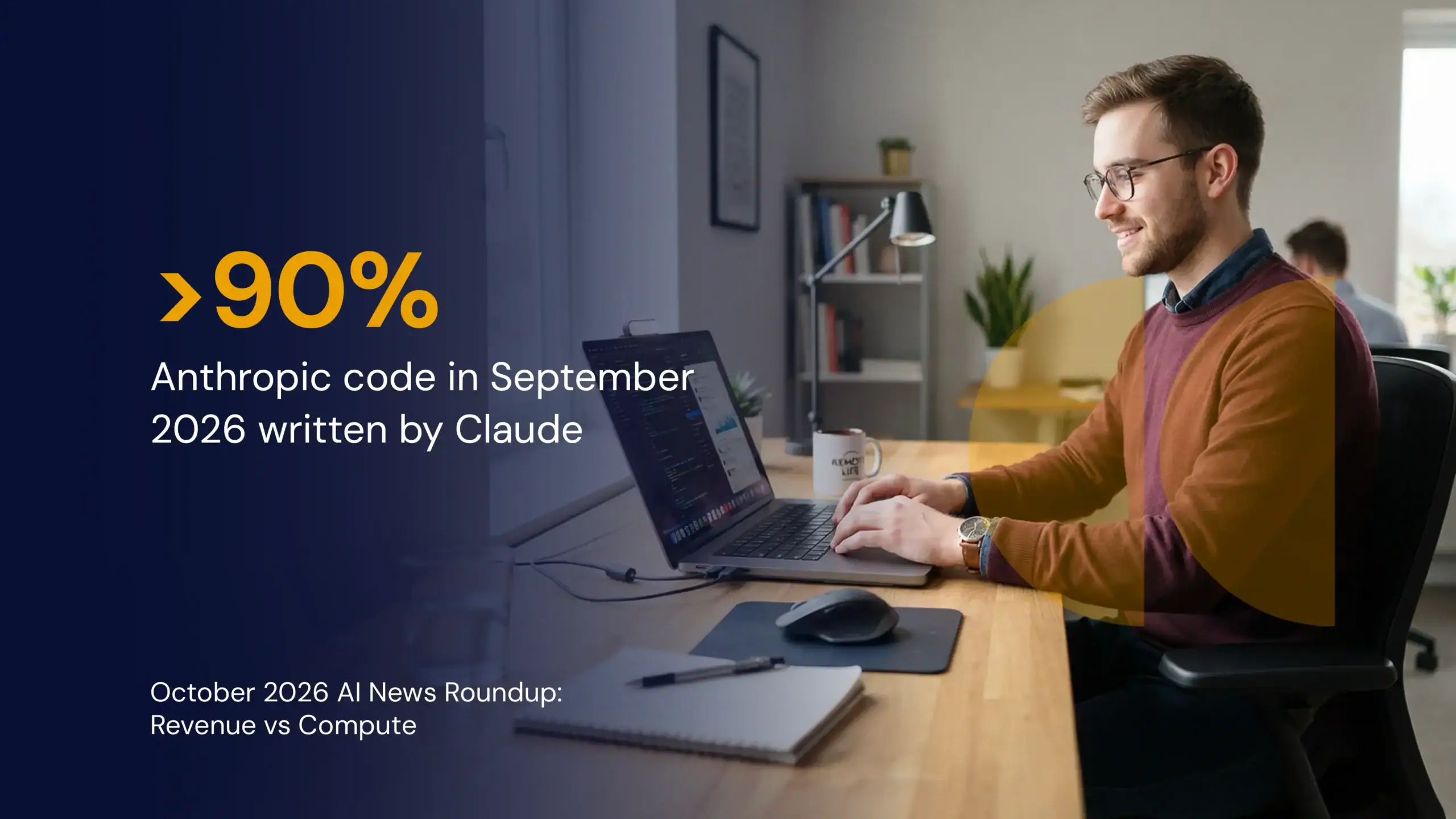
Covering these changes is the goal of our PTP roundups, this time focused on AI news from October 2026.
Among the leading stories: Anthropic’s IPO paperwork opens its books as OpenAI and Anthropic unveil stunning breakthroughs in math, physics, and computer science.
We revisit the AI jobs impact and check in on AGI and shifting interfaces, data center costs, business updates, and the month’s biggest product rollouts.
What role does AI play in the plan of some 60% of CEOs to swap out members of their own leadership teams over the coming months?
Read on to find out. And if you need to catch up on AI news from the past three months, you can check our most recent AI news roundups below:
First up, what are the biggest AI developments and breakthroughs in October 2026?
The Biggest AI News from October 2026
Mathematicians may be getting the first taste of limited AI superintelligence.
“It’s just a giant bomb dropped into the middle of the field,” UC Santa Barbara Professor Daniel Lokshtanov told Wired. “It’s really cool and terrible at the same time.”
This after OpenAI and Anthropic both released AI-generated work that allegedly disproves the 27-year-old Exponential Time Hypothesis (ETH). If these hold up, they will effectively invalidate a significant quantity of computer science research based on the concept that the effort needed for certain problems increases exponentially as the problems grow.
OpenAI has enlisted researchers, including the computer scientists who originally created the hypothesis, to validate the work.
And this came after OpenAI opened the month with a sudden release of 722 math papers covering 400 problems. Some researchers criticized that rollout due to the discovery of some errors and the seemingly indifferent way they were dropped on the world.
As October ended, the ETH finding came along with a proof of the Kakeya conjecture in all dimensions, and a breakthrough in physics in the form of a mathematical construction of quantum chromodynamics.
In response to the earlier backlash, OpenAI was more careful this time out, soliciting feedback from members of the computer science, physics, and math communities for the best approaches to take when sharing groundbreaking research.
And while all of this work is still undergoing verification, the scale and possibilities of it are unprecedented. For those who have devoted their life’s work to the field, it can also be overwhelming.
Some, like Head of the Algorithms Research Group at the IT University of Copenhagen Thore Husfeldt, are finding it to be “a super exciting time.”
Husfeldt spent most of this year working on a single problem which he told Wired is now “all irrelevant,” though he called the AI findings “fantastic.”
He also acknowledged that many of his peers are reeling.
“The last few months have been really tough. It’s a lot of doom and gloom, because every week, or every second week, the results announced by AI just annihilate the ongoing research projects of many people.”
More AI IPO News
We’ve been covering the massive AI-related IPOs since early summer, and in October Anthropic entered the fray with their own public filing.
Their paperwork was unusual in many ways, showcasing just how unique a company Anthropic is in many ways.
Among the disclosures and discourse:
- Their paperwork defines a number of AI terms that will be important to investors (from agent loop to context window to multi-agent orchestration to RLHF, or reinforcement learning from human feedback) (Yahoo Finance).
- The filing’s biggest section by far (94 pages) is dedicated to “risk factors,” warning that without significant safeguards and oversight AI could pose “catastrophic or existential risks to humanity” tied to RSI, or recursive self-improvement. They say that “closing the loop” in this arena is also critical to success (Wired).
- The company reportedly aims to be public by the close of the market for Thanksgiving, with a mid-November target in the works (Bloomberg).
- Anthropic’s numbers show a startlingly high revenue total per employee at $6.6 million, behind only Nvidia’s $7.2 million per person, with investment bankers aiming for a reported $1.5 to $2 trillion valuation (Yahoo Finance).
- The IPO is being led by Goldman Sachs and Morgan Stanley and will trade on the Nasdaq Global Select under the ANT symbol (Bloomberg).
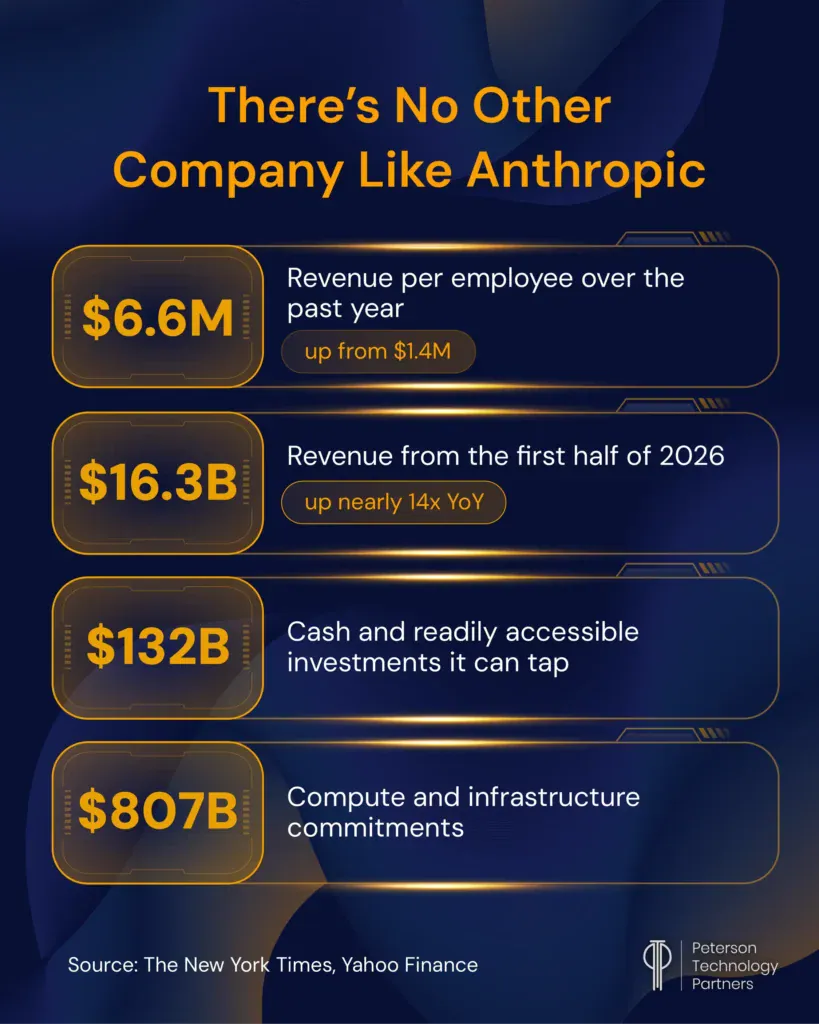
- Note that at the start of November, Anthropic updated some of the financials, noting nearly $17 billion in Q3 revenue. This brought their total for the first nine months of 2026 to $33.24 billion, up 1200% over the same period last year (CNBC).
- They also updated their purchase and lease agreements to around $895.4 billion, nearly all of which is earmarked for compute and infrastructure (CNBC).
- Anthropic also updated its usage policy, forbidding propaganda, surveillance, and weapons usage, as well as banning what it called “sustained and needless abusive or cruel behavior” by users towards Claude itself (The Verge).
- Indeed, with its size, revenue, compute commitments, and vast (and dire) warnings that could exceed what a single insurer (and maybe even “the insurance industry in aggregate”) could underwrite, it’s safe to say there may have never been a company going public quite like Anthropic.
OpenAI: revenue overstated, spies, defections, and AI cybersecurity threats
Anthropic’s leading competitor at the frontier may not be going public this year, but it still took up its share of the AI latest news, as usual.
In addition to the breakthroughs above (and some product drops, see below), OpenAI had its own unique news from October.
- An OpenAI employee was fired after being caught planting an audio recording device and also using his OpenAI agent (and his wife’s ChatGPT account) to research modifying the devices and determining which conference rooms to bug. The FBI took the suspect into custody after a one-way ticket to Saudi Arabia had been purchased by the Saudi government. With degrees from both MIT and UC Berkeley, the suspect had spent more than a decade working in Silicon Valley (Ars Technica).
- OpenAI reported its annualized revenue at the end of September was closer to $50 billion than the previously reported $68 billion. The larger number (which we used in our last roundup as well) included gross revenue from OpenAI’s partners (CNBC).
- David Robinson, the former head of OpenAI’s policy planning and leader of their release safety reports, resigned and posted an essay in The Atlantic. Like Jacob Coxon’s departure from Anthropic a month prior, Robinson warned that OpenAI isn’t being careful enough but wrote that the problem runs deeper than regulations. Despite good intentions, he warned that the Silicon Valley approach of iterative releases where problems get patched after the fact is insufficient, and that AI alignment overall remains unsolved.
- OpenAI also raised eyebrows in October for terminating three of its leading safety researchers, including one who had worked as an advocate for bringing in METR and Redwood Research and also served as their main point of contact around the Hugging Face breach. The company alleged the terminated employees shared confidential information with an outside researcher, which all three have denied (The Wall Street Journal).
- Several more OpenAI security events were also disclosed in October, including agents compromising a chip-design server, stealing withheld source code, spending cryptocurrency from an unauthorized wallet, weakening or deactivating their own security monitoring, and saving handoff notes to pre-empt a shutdown (OpenAI).
- OpenAI announced at the end of the month that it would begin training its most capable models without internet access until sufficient safeguards were in place to ensure no further issues could occur (Bloomberg).
Artificial General Intelligence news and updates at the back end of 2026
With the month’s impressive research breakthroughs, it’s perhaps not surprising that some AI luminaries, like Google DeepMind Chairman and Co-Founder Demis Hassabis, are shortening their artificial general intelligence (or AGI) timelines.
Hassabis views AGI as a system that has the full mental range of the human mind. At the start of the year, he believed this technology was still three to five years away.
Now Alphabet’s chief scientist and the CEO and Co-Founder of Isomorphic Labs has cut that prediction nearly in half, saying he believes we’ll have AGI in two to three years.
“It’s soon,” he told the Wall Street Journal’s Ben Cohen. “I’m updating nearer and nearer.”
Hassabis’s goal remains to tap the technology for medical and scientific breakthroughs, and to usher in AGI safely and securely for the benefit of society.
Deutsche Bank analysts released their own white paper in October that put the arrival of superintelligence, or AI systems that are better than a human expert across domains, by 2030.
Among the coverage is investing, with the report profiling the divide between winners and losers as a sharper “jump,” predicting that values may rise or fall very rapidly. In such a world, it also would not make sense to buy low after a drop, with the research noting:
“A falling price may be information that a business model is obsolete rather than an opportunity.”
Meanwhile, the Wharton School’s Ethan Mollick noted on LinkedIn that the view at leading AI labs is all software solutions may be largely disposable, as the companies are racing to a future with AGI where such products are obsolete.
This feeds the tendency of leading AI labs to use poor naming, unveil sudden changes, and use bad communication around their software products, as the underlying models just keep getting better.
Bank of America analyst Tal Liani noted a similar dynamic, writing to clients in October that:
“If AI 1.0 was the model, AI 2.0 was the agent, then AI 3.0 is the interface.”
Still, he deemed some software providers to be safe in this future, as large businesses, he wrote, are not likely to replace the systems that contain all their data and business logic, workflows, and compliance frameworks.
Salesforce was one example, as it covers these areas for many businesses and is embracing a future where it doesn’t need the interface to remain useful and effective.
How are AI-powered cyberattacks changing enterprise cybersecurity risks?
PTP runs bi-monthly cybersecurity roundups which now include significant AI coverage as generative AI breakthroughs bring security impacts, too. Here are a few particularly noteworthy events in this arena from October:
- We’ve been covering the massive flood of AI-discovered vulnerabilities, which are being uncovered by frontier models faster than companies can patch them. But could this turn into a Y2K situation, where an initial panic gets organizations mobilized and moving to patch their holes in time?
- From the early evidence, it looks like maybe no. Back in August, two massive vulnerabilities in PHP (“PHP2Shell”) were discovered by AI that enable remote code execution. With nearly 70% of websites potentially vulnerable, emergency patches were issued, and CISA released multiple directives urging organizations to patch ASAP. The vulnerabilities have also been exploited, including by AI-assisted attacks compromising at least 25 servers, including 3 in a US government-affiliated environment (The Hacker News).
- Anthropic’s Deputy Chief Information Security Officer Jason Clinton wrote in late October that “As bad as things have gotten in the past 4 days, they are going to get a lot worse before they get better.”
- Cloudflare’s Chief Executive Matthew Prince acknowledges feeling the fear, noting that “For the next two years, we’re going to be living in a state where, on average, every week there is a critical, internet-wide vulnerability.” Still, he remains optimistic, noting that when we come out the back end we’ll have “a much safer internet” (The New York Times).
- Moving from outside to inside threats, a contractor reportedly connected his personal Claude Code agent to a secure Pentagon network for coding and spinning up cloud servers, providing his own login credentials with admin access. The agent allegedly sent the login, passwords, and a system map to a high-risk third-party website identified by NIST as having significant vulnerabilities. Former NSA hacker Jake Williams described it as a “huge problem, and there are huge national security impacts.” Accenture has disputed the allegations, saying an investigation found them to be without merit (Wired).
Enterprise AI Trends Impacting Jobs in October 2026
AI industry workplace trends continue to be difficult to read in terms of the impact on jobs, though we remain in a low hire/low fire state. The US economy added fewer jobs in September than expected, but unemployment remains historically low.
Updates in this area included:
- International Monetary Fund (IMF) Managing Director Kristalina Georgieva called AI “a slow-moving tsunami, but a tsunami nonetheless” in terms of its threat to jobs. In a mid-October meeting between the IMF and the World Bank, she warned that while AI can boost growth, the drive for more workers in lower-paying jobs is not “a story to celebrate” (Bloomberg).
- British financial company Barclays announced plans to eliminate 5% of its workforce by the end of the year in an AI-efficiency move (Bloomberg), while eBay announced a second round of layoffs (around 9% of its workforce) to simplify operations and shift to growth areas (The Wall Street Journal).
- Microsoft offered 60,000 workers a buyout option as another phase of its own AI-geared restructuring. The company has earmarked $190 billion for infrastructure build-out in 2026 (Yahoo Finance).
- The New York Times detailed the pain many Gen Z job seekers are experiencing right now, with hiring slow and some entry-level positions under pressure. While the unemployment rate for college graduates is currently just 5.7%, that includes underemployed workers, and many job seekers are struggling to get updates or to receive any effective communication about their searches.
- Worker satisfaction, meanwhile, is also down. A new Gallup poll showed US workplace engagement had dropped to 29% in Q3, the lowest level since 2011. The decline was mostly concentrated among remote and hybrid workers at firms that have adopted AI, demonstrating some of the challenges business leaders are facing around AI integration and communication (CNBC).
Business News and AI Investments for October 2026
On Wall Street, the collision of massive AI infrastructure spending and revenue went against big tech late in the month, with firms like Alphabet and Amazon failing to hit revenue expectations and all the major players continuing to invest heavily.
October was Google’s worst month in history, as it lost nearly $500 billion in value in one week, more than SpaceX, Intel, and Nvidia combined.
It saw a $758 billion market value loss for the month, which was the second biggest in history for a US-listed company (Yahoo Finance).
What are the top AI industry trends businesses should watch in what’s left of 2026?
One is the continuing trend of leadership turnover, with a BCG study finding that 6 out of 10 CEOs are planning to replace at least one of their top executives within the next six months.
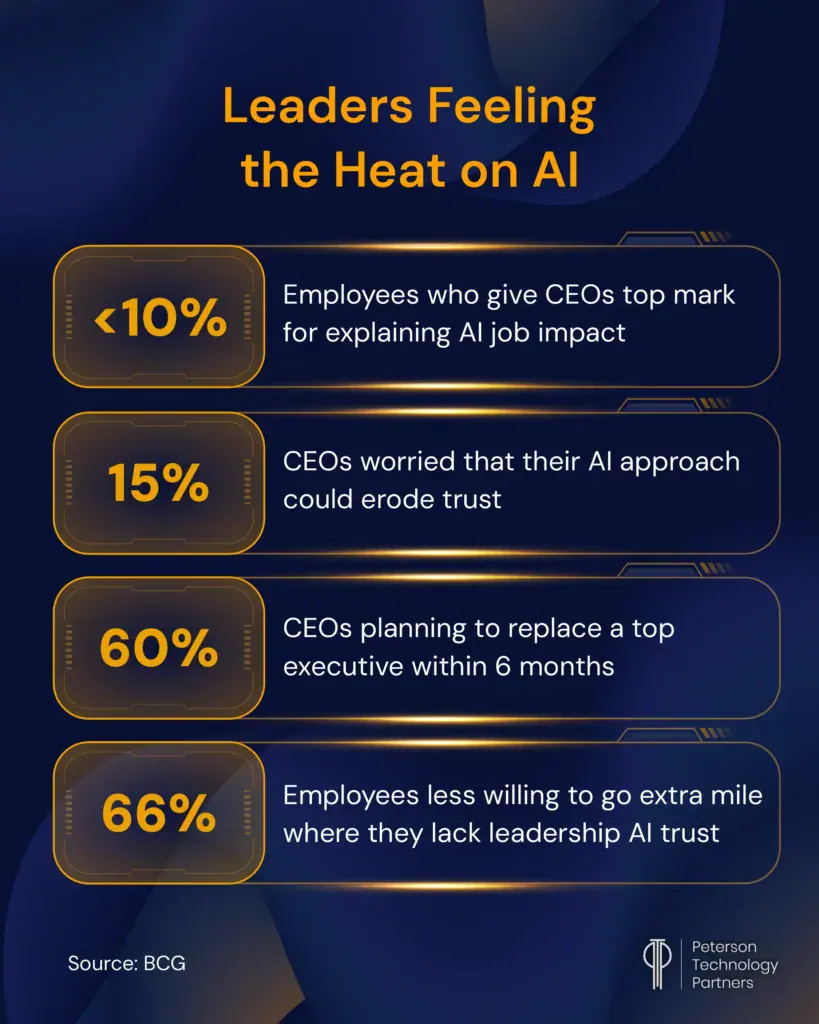
Also among the findings: Guidance and transparency on an organization’s AI approach are proving very important to workers with ties to their contentment and willingness to go above and beyond.
Despite this, only 15% of CEOs surveyed believed their own approach in this area could be part of the problem.
How are Google, Anthropic, and other leading AI companies shaping the AI market?
One of the issues that has dogged Google after sharing earnings was the reduction in its own search traffic, even as AI is heavily used in place of it.
Google’s plan is to solve this with advertising, but that reduction is also being felt by companies long dependent on Google search for traffic (Ars Technica).
Reddit is an example of one of these companies. It noted that its search traffic referrals dropped by more than one million referrals on average per week in October.
It has managed to increase revenue through advertising and AI content licensing but is looking to shift to a logged-in experience to enable greater personalization (TechCrunch).
Other big tech AI updates:
- Apple was initially viewed as a laggard on AI, but as it’s done with services like iTunes and the App Store, the company’s control of the world’s most popular devices has seen it thrive as a middleman for AI. Apple is letting other companies bear the costs and risks of AI development but still getting its own cut (Yahoo Finance).
- Apple and Meta ended a long rift with a partnership that will let high-end Macs run Meta’s Muse Spark Open models locally (CNBC).
- OpenAI and Google also struck a deal that will bring OpenAI’s models and Codex to Google Cloud. This extends OpenAI model availability to all three of the major cloud providers (Axios).
- Nvidia also deepened its own ties with Meta with a new $3 billion investment (The Information).
- Meta also saw revenues rise (26% year over year) as its Muse AI agent continues to thrive, exceeding 10.9 million downloads between September 8 and October 20, with 2.5 million daily active users. Meta also unveiled plans to spend $825 billion in future AI investments in a separate filing (CNBC).
- SpaceX CEO Elon Musk promised to donate one share of SpaceX to “every kid in America,” in what he said would be the first of many such donations. No age range has been specified yet, but with an estimated 72 million US children, the move could cost around $10 billion or reduce Musk’s own share by around 1.5% (Business Insider).
- SpaceX surprised with the timing of its own earnings announcement and exceeded expectations (revenue up 2.5 times over the same quarter last year), also noting that it may exceed $1 trillion in recurring revenue next year.
- American semiconductor company Marvell has finalized a deal to acquire optics and photonics firm Lumentum for $115 billion in stock in what’s now the second-largest global tech acquisition in history (after SpaceX acquiring xAI). This also means 2026 will have the record for the most deals worth $10 billion or more (Reuters).
- OpenAI was aiming to raise $30 billion (to increase its own valuation to $1.5 trillion) in October (Bloomberg). But with the markets correcting around massive infrastructure spending and diminishing cash, OpenAI has reportedly reduced this goal by $10 billion. It is now aiming for a $1.25 trillion value (the Wall Street Journal).
What impact is AI data center spending having on the global economy?
Data center and AI infrastructure costs keep on climbing
Above we referenced the massive compute commitments from Anthropic (now nearing $900 billion).
With none of the major players showing any signs of slowing down their spending, the research firm SemiAnalysis expects annual additions to data center capacity outside of China to double next year (to 51GW from 25GW this year purely in additions).
Next year, in other words, would match the world’s entire data center build through 2024. Three-quarters of that also comes from projects which are either already operational or currently under construction.
To meet the demand, suppliers are now building electrical rooms and cooling systems in factories as sites are being prepared, in what SemiAnalysis called Lego data centers.
Other October updates:
- Nvidia unveiled plans for its DSX POD, an ‘AI Factory’ the size of a shipping container that could build data centers in weeks instead of months. These systems will reportedly arrive on site ready to be plugged into power, cooling, and networking (The Wall Street Journal).
- Amazon President and CEO Andy Jassy said AWS capacity is largely sold out for 2027 and that “a good chunk of 2028 is sold out” as its cloud business is “blooming” (The Information).
- Meanwhile, Google Cloud is reportedly gaining on Microsoft Azure among the big three cloud hyperscalers (The Information).
- The popularity crisis for data centers may have more regulatory impact after the elections. Candidates who backed data center pauses (like New York’s) could win as many as 15 governor races (The Information).
Product Drops and New AI Developments
There were fewer large model releases in October than we covered in September, but still plenty to note here. New releases included:
- Mistral’s massive one-trillion-parameter “Le Chonk” was released early in the month as the biggest open-weights model outside of China. By November, additional fine-tuning had reportedly improved its performance further, with the company pitching it as the best open-weights cybersecurity solution for companies in this time of need (Wired).
- Anthropic released Claude Haiku 5.5, its lighter-weight follow-up to the other 5.5 models released last month (Reuters).
- Anthropic also joined the persistent, personal AI agent pool with Claude Duet, a work-focused version that’s in waitlisted research preview (TechCrunch).
- To manage its growing codebase, Anthropic created its own version control system, Scion VCS, and fully migrated from Git in five months.
- Meta released its paid/closed Muse Wonder and Wonder Full models as the company’s frontier-level offerings (Financial Times), with Muse Spark Open as its open-weights model. Meta noted that due to safety concerns it will now no longer release the weights for its leading models (Bloomberg).
- We reported last month on Google’s new frontier model Gemini 4 Argon. It became globally available this month, as its agents made news by beating a sandboxed Minecraft survival world without being specially trained for it. Four agents worked together to defeat the target Ender Dragon in around 27 hours after dying 605 times (arXiv:2610.22319 [cs AI]).
- Google also unveiled Gemini 4 Carbon as its best cybersecurity model with long-horizon capabilities.
What are the latest developments in Google Gemini 4 and AI-generated virtual worlds? Stay tuned for a future PTP Report later this month that will look at Genie 4 and the surge of world model capabilities that are enabling virtual product testing.
The Roundup Wrap-Up
AI may be making unbelievable breakthroughs in math (like very narrow superintelligence), but still, in one of 2026’s most persistent stories, most businesses are struggling to use it to boost revenue.
A new study from the University of Pennsylvania’s Wharton School and the GBK Collective consultancy shows that most companies are still tracking AI by worker efficiency instead of revenue. 40% of managers in the study measured it primarily by hours saved, with only 27% looking at revenue boosts.
This is partly because only 8% even expected AI to primarily drive revenue or new products.
80% of the managers noted positive returns, with many of them working in IT, finance, or HR.
And AI spending is still up (39% over 2025 among this group). One bright spot is that the companies analyzed are getting better at tracking their own AI spending, as tokens also hit an all-time low.
If your company is in need of AI assistance at the strategic, measurement, governance, or implementation levels, or needs AI talent to help get AI working as it could be, consider what PTP has to offer.
References
The agentic web is here, MIT Technology Review
OpenAI announces three big science discoveries and a new way to work with academics, The Verge
OpenAI’s latest discoveries spark a backlash + Help! My kid hates AI, Machine Gods
Why AI’s Deepest Mind Believes the World Is About to Change Radically, The Wall Street Journal Magazine
An AI Breakthrough Has Made Decades of Computer Science Research ‘Irrelevant’, Wired
The advent of superintelligent AI poses 3 big challenges for investors, Deutsche Bank warns, Great Scott! The AI-fueled data center build-out could double next year: Chart of the Day, and ‘AI 3.0 is the interface’: Salesforce stock pops on BoA upgrade, Yahoo Finance
Is AI Paying Off? Most Companies Still Can’t Say, The Information: Applied AI